
Release time: Sep 23,2026
Views: 12
Design for Manufacturability exerts a direct economic effect on consistent medical production. While technically feasible, a product configuration still introduce unnecessary tooling complexity, excessive inspection burdens, difficult assembly, and yield-limiting production steps.
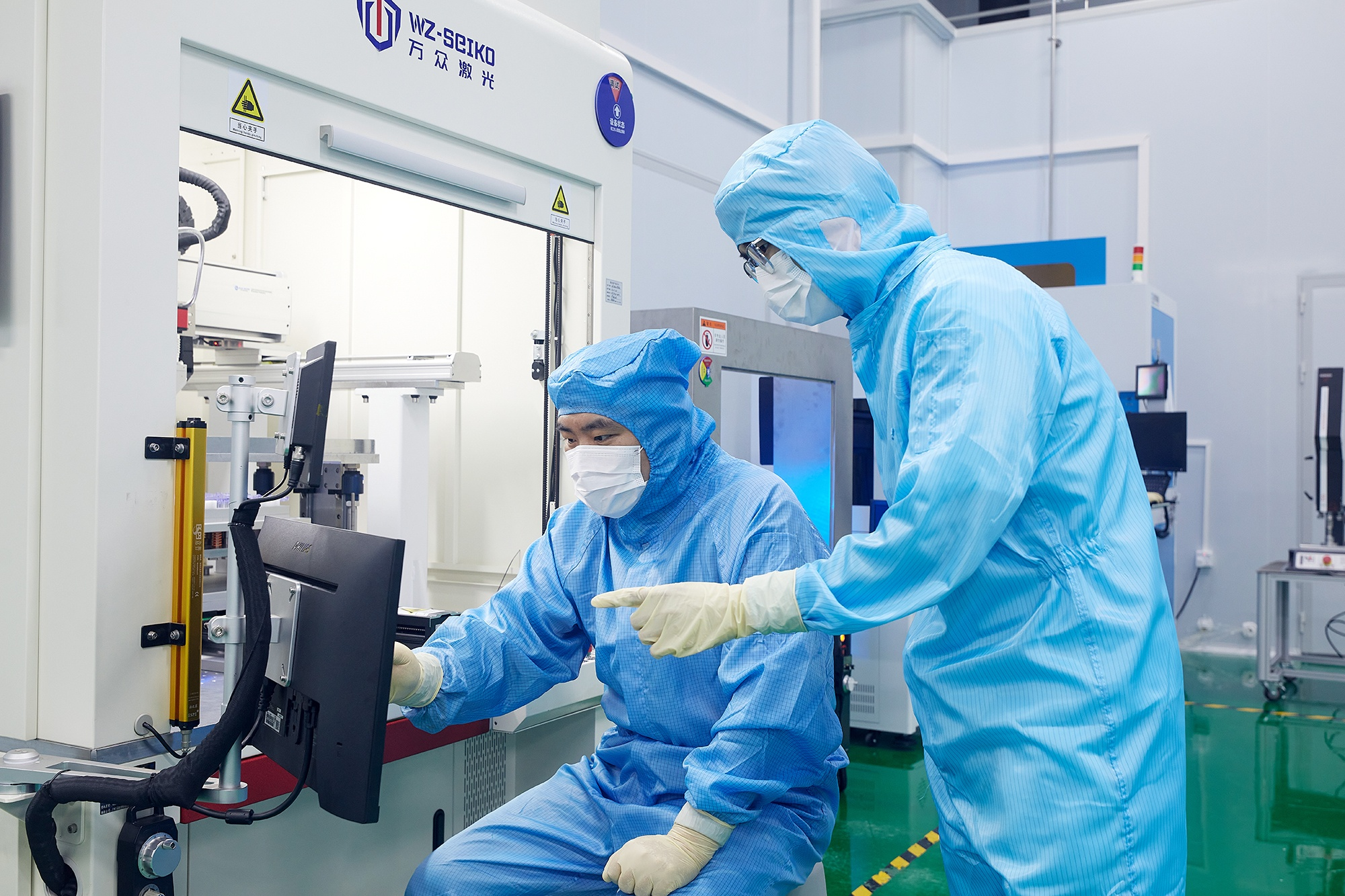
In DFM programs, medical device engineering services surfaces these trade-offs before they are locked into tools and routine operations. Kingsin’s DFM work covers part standardization, cost analysis, process optimization, assembly, and quality control, providing a practical basis for balancing product function with production economics.
Every engineering choice creates a manufacturing consequence. Tight tolerances may demand more process control and inspection; complex geometry increases tooling difficulty; additional components create more handling, joining, and inventory activity.
The purpose of DFM is not to remove every costly feature. Some complexity is essential to product function. The more useful task is to distinguish justified complexity from features that add cost without creating proportional technical value.
A commercial DFM review asks:
l Does this tolerance materially improve product performance?
l Can part count be reduced without changing the intended function?
l Does a feature create specialized tooling or inspection requirements?
l Can assembly orientation and access be simplified?
l Would a more standardized component reduce sourcing or handling effort?
l Does the current configuration support a more scalable production route?
These questions connect engineering choices with recurring production cost rather than treating cost as a purchasing issue alone.
A manufacturing feasibility study should compare realistic alternatives, not simply conclude that a concept can or cannot be produced. Two options may deliver the same function while creating very different tooling, assembly, inspection, and operating burdens.
|
Engineering Choice |
Potential Cost Effect |
DFM Review Focus |
|
Very tight tolerance |
More control and inspection |
Confirm functional necessity |
|
High part count |
More handling and assembly |
Evaluate consolidation opportunities |
|
Complex joint |
Additional fixtures or process steps |
Compare joining alternatives |
|
Non-standard component |
Greater sourcing complexity |
Review standardization potential |
|
Difficult orientation |
Lower assembly efficiency |
Improve access and positioning |
The optimal solution is rarely the lowest-cost option. Medical products still need to satisfy defined functional and quality requirements. The value of the comparison is that the team sees what each cost driver buys before investment becomes difficult to reverse.
A manufacturing feasibility study therefore support both engineering and commercial decisions. It clarifies where spending protects function and where the same outcome may be achieved with a simpler production structure.
Production economics depend heavily on how often a product moves through the planned sequence without rework, repeated adjustment, or additional inspection. First-pass yield is influenced by the product architecture as well as by process control.
Difficult orientation, limited fixture access, sensitive fits, or joining features that require manual correction can increase variation even when every individual component is technically manufacturable.
Assembly-aware DFM considers these conditions before the configuration is released. A clearer datum may improve positioning and inspection. Better joining access may reduce handling. A tolerance relationship is adjusted if it is unnecessarily sensitive while still preserving the functional requirement.
Kingsin’s production resources include injection molding, medical-grade extrusion, SMT, laser welding, ultrasonic welding, and cleanroom assembly. The relevant process can provide practical context for whether the proposed layout supports efficient execution.
Commercial value increases when medical device engineering services address both manufacturability through DFM and the probability of producing acceptable output without avoidable corrective work.
A configuration suitable for a low-volume prototype may not be economical at higher output. As volume grows, recurring labor, fixture time, inspection effort, material handling, and process cycle complexity can outweigh an initially inexpensive tooling choice.
Tooling economics should therefore be evaluated against expected production volume. A lower initial investment may become less economical if it creates slower cycles, more manual handling, or additional inspection at scale, so DFM should compare one-time tooling cost with recurring unit-level effort.
DFM should consider how the broader cost structure changes with the intended production scenario. A more standardized component or automation-friendly layout may require earlier engineering effort but reduce repeated work later.
Kingsin’s engineering service specifically includes cost analysis and part standardization as part of DFM. These activities can help teams examine whether product architecture supports a practical transfer from initial production into larger-scale execution.
Once approved, the economic rationale should be carried into the released configuration. Otherwise, a later revision will accidentally reintroduce the very assembly burden, specialized component, or inspection step that earlier DFM work removed.
The commercial objective is a product that remains practical to build as volume changes, not simply one that can be manufactured once.
DFM creates business value when product function is balanced against tooling, assembly effort, inspection burden, first-pass yield, and scalability. Making these trade-offs visible early helps teams spend complexity only where it produces meaningful technical value.
Through integrated DFM and cost analyses, Kingsin evaluates manufacturing feasibility to translate technical risk into clear production economics.


Copyright © 2025 Kingsin Technology Pte. Ltd. All rights reserved.
By: JOYMAGIC