
Release time: Sep 23,2026
Views: 8
A useful prototype should make it easier to identify what is working and what needs to change. When too many factors change from one development stage to the next, it becomes difficult to determine which change affected the result.
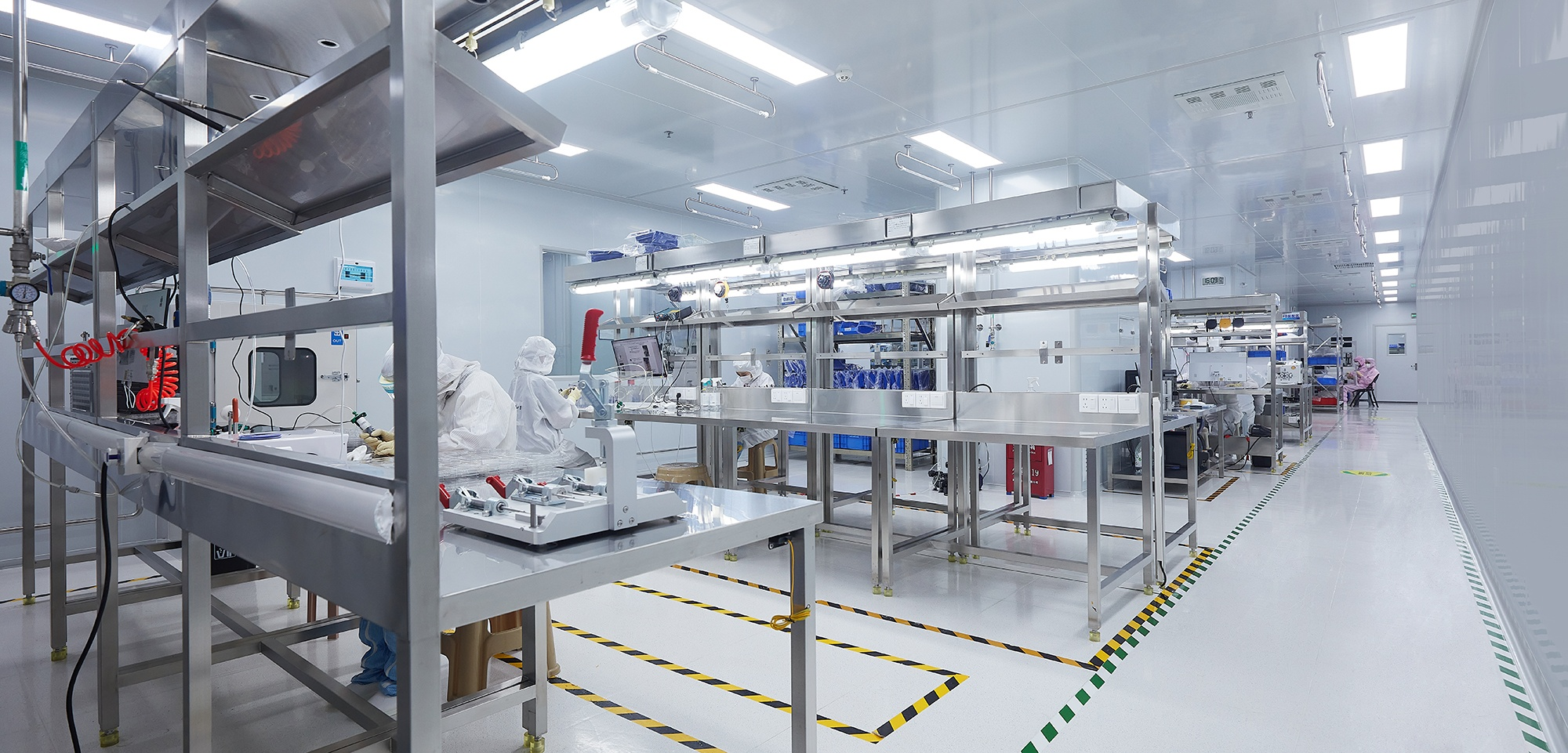
Within prototype programs, medical device engineering services improve performance by applying a more disciplined experimental structure: define the hypothesis, isolate influential variables, use consistent evaluation methods, and decide in advance what result will justify the next action. Kingsin supports this work through engineering, sample development, laboratory resources, quality inspection, and manufacturing feedback.
Industrial prototype work does not need academic language, but it does need a clear cause-and-effect question. Before a build starts, the team should state what is being changed and what observable result is expected.
For example, an engineering hypothesis might propose that reducing wall thickness will change flexibility, modifying an interface dimension will improve fit, or selecting a different material will alter handling behavior.The statement establishes a clear build objective and defines the key evaluation metrics
A useful hypothesis contains:
l the variable being changed;
l the baseline condition;
l the expected response;
l the measurement or observation method;
l the decision that will follow the result.
This prevents aimless repetitive sampling. When the prototype arrives, the team already knows what it is trying to learn rather than searching afterward for a reason to accept or reject the build.
During medical device prototyping, changing one influential factor at a time often makes attribution easier. When geometry, material, assembly method, and process conditions all change simultaneously, even a better-performing sample may provide weak engineering evidence.
An experimental matrix helps keep comparisons organized.
|
Experimental Element |
Example Question |
Review Purpose |
|
Baseline |
How does the current configuration behave? |
Establish a reference |
|
Controlled variable |
Which single feature is intentionally changed? |
Isolate cause |
|
Constant conditions |
What must remain unchanged? |
Reduce confounding effects |
|
Observation |
Which dimension, function, or behavior is recorded? |
Create comparable evidence |
|
Decision rule |
What result triggers keep, revise, or retest? |
Close the iteration |
For more complex comparisons, teams use a small experimental matrix rather than relying on one A/B build. Preserving a common baseline and repeating the same measurement method across planned conditions improves attribution and makes the final engineering conclusion easier to defend.
Not every project requires a large experiment. The principle is proportional control: use enough structure to distinguish the effect of the intended change from unrelated variation.
This makes medical device prototyping more efficient because each sample produces interpretable information rather than another version to debate.
Prototype results can be misleading when temporary manual intervention influences the outcome. Hand-adjusted alignment, unusual assembly force, selective polishing, or another one-off correction may make a sample work without proving that the underlying product configuration is robust.
Reviewers should record these interventions as experimental conditions. If a sample only succeeds after manual correction, the team needs to determine whether the root cause sits in geometry, material behavior, process capability, assembly access, or a combination of factors.
DFM knowledge and manufacturing input are useful for this attribution. They help separate inherent product effects from fabrication deviations that may disappear or worsen under a different production method.
Where material behavior is part of the question, Kingsin’s physico-chemical laboratory evaluates properties including density, viscosity, melting point, hardness, and relevant compatibility with solutions, drugs, or disinfectants. Dimensional, functional, electrical, or applicable leak testing provides additional evidence depending on the project.
The goal is not more data. It is evidence that explains why the observed performance changed. When two samples differ, reviewers should be able to point to the intentional variable or identify the uncontrolled condition that prevents a confident conclusion.
Prototype programs continue indefinitely if every successful round automatically leads to one more “improvement.” A stronger method defines the stopping condition before late-stage iterations begin.
Exit criteria should reflect the purpose of the experiment. They may include:
l target interface fit has been demonstrated;
l dimensional behavior is sufficiently stable;
l a defined functional response has been achieved;
l material evidence supports the selected option;
l assembly is completed without temporary corrective steps;
l the intended production route supports the configuration.
Once these conditions are satisfied, the project should move from experimentation toward a controlled product definition. Confirmed findings are carried into the relevant drawings, BOM information, inspection requirements, material specifications, or assembly instructions.
That transition is supported by medical device engineering services, ensuring that the next build or production activity uses the configuration actually supported by the experiment.
Medical device prototyping is optimized when iteration narrows the decision space. The best outcome is not the largest number of samples, but a smaller set of well-designed comparisons that produce defensible conclusions and a clear point to stop.
Prototype optimization works best when every round answers a specific question. Instead of changing several factors at once, teams use test results and design feedback to identify what needs improvement and what should remain unchanged. Over time, this makes each iteration more informative and reduces unnecessary trial and error.
Kingsin supports medical device development from early prototypes through manufacturing, helping teams turn design changes into workable solutions. With a clearer link between testing, refinement, and production, prototype development can move forward with greater confidence.


Copyright © 2025 Kingsin Technology Pte. Ltd. All rights reserved.
By: JOYMAGIC