
Release time: Oct 23,2026
Views: 16
Medical device product development translates clinical needs into engineering requirements, evaluates safety and performance, and prepares manufacturing processes. Early decisions affect redesign, quality, and market entry. When planning this process, teams can work with an experienced engineering partner such as Kingsin to evaluate design requirements and manufacturing feasibility.
For hospitals, laboratories, distributors, and original equipment manufacturer (OEM) or original design manufacturer (ODM) brands, understanding each development stage helps clarify responsibilities and prepare for commercialization.
Medical Device Product Development moves through need definition, engineering design, prototyping, testing, and manufacturing preparation. Scope depends on intended use and risk.

Teams define the user, problem, and conditions of use, then set measurable requirements for performance, materials, cleaning, and safety. A fluid-handling component may need specified connections and fluid compatibility. Clear requirements give design and testing teams shared acceptance criteria.
Engineers turn requirements into drawings, material specifications, and assembly concepts. Design reviews check user needs and whether parts can be sourced, assembled, and inspected. Early design-for-manufacturing input can flag complex geometries or unnecessary part variation.
Prototypes test assumptions before production tooling and can reveal fit, usability, or performance issues. Teams test against agreed criteria, document findings, and revise the design. The FDA’s device development process describes prototyping, regulatory review, and post-market monitoring.
A practical sequence is: define requirements → build → evaluate → resolve issues → update the design.
Testing and regulatory planning establish whether a device meets specifications, addresses risks, and fits its market. Start planning during design because evidence needs affect test methods and documentation.
Design verification checks whether outputs meet specifications. Design validation evaluates whether the device meets user needs and intended use. Process validation checks whether production consistently achieves its intended result.
|
Activity |
Core question |
Example |
|
Verification |
Does the design meet specifications? |
Does a component meet dimensional tolerances? |
|
Validation |
Does it meet user needs? |
Can intended users operate it as required? |
|
Process validation |
Can production repeat the result? |
Does a joining process meet acceptance criteria? |
Methods may include inspection, functional testing, material assessment, or usability studies, depending on the device.
Teams identify hazards, evaluate risks, and document controls for material properties, manufacturing variation, use errors, and operating conditions. Usability testing can reveal interaction problems; findings should inform design updates and further testing.
Requirements depend on intended use, classification, and market. In the United States, the Food and Drug Administration (FDA) determines the applicable pathway. Other markets may require separate assessments or registrations; confirm obligations with qualified regulatory professionals.
Production readiness requires a stable design, controlled documents, capable suppliers, and defined assembly and inspection procedures. A prototype alone does not prove consistent manufacturing at scale.
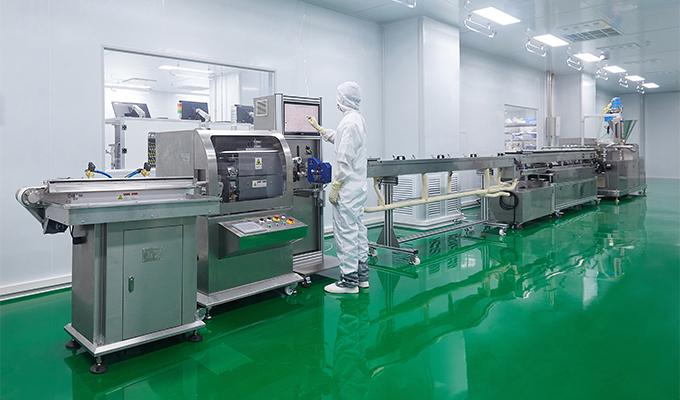
Design for manufacturability (DFM) examines how design affects production complexity, quality, and cost. Early review can reduce redesigns; standardizing components or simplifying assembly must preserve safety and function.
Production teams need controlled drawings, a bill of materials (BOM), specifications, and inspection reports. Assess supplier capability, conformity, change communication, and traceability. Agree who owns documents, approves changes, and records issues.
Before scaling up, confirm tests are complete, suppliers meet specifications, and assembly and inspection steps documented. Review process controls, training, packaging, and records. The FDA’s Quality Management System Regulation (QMSR), effective February 2, 2026, incorporates ISO 13485:2016 by reference.
Kingsin provides engineering support for OEM and ODM teams working to move medical device concepts toward production. Its services include:
· Product Design Support: Assistance in translating product concepts into engineering designs.
· Prototyping Coordination: Coordination with prototype suppliers to support early design evaluation.
· Design for Manufacturability (DFM): Support for part standardization, cost analysis, process optimization, assembly, and quality-control considerations.
· Technical Documentation: Support with engineering drawings, bills of materials (BOMs), and inspection reports.
· Supplier Sourcing: Assistance with identifying and coordinating suppliers in China.
On its engineering services page, Kingsin describes support from concept to engineering realization, reporting over a decade of experience and 200+ design-support cases. Its stated 48-hour supplier response is not a guaranteed prototype delivery time.
Kingsin’s DFM support covers standardization, cost analysis, process optimization, assembly, and quality control. Agree on prototype scope, acceptance criteria, and testing responsibilities.
Kingsin provides engineering documentation and sourcing support to help coordinate product development and manufacturing. Its published production capabilities include injection molding, extrusion, welding, surface-mount technology (SMT), and ISO Class 7 cleanroom assembly. Confirm process suitability, deliverables, and regulatory responsibilities directly.
See Kingsin’s engineering services and official website for details.
A successful launch aligns clinical needs, engineering requirements, testing evidence, regulatory planning, and manufacturing controls. Commercialization is a coordinated process, not simply a handoff after design approval.
Before launch, confirm requirements, risk controls, production readiness, supplier capability, and market-entry obligations. Check that:
· Design and test records are complete and approved.
· Manufacturing instructions, inspection criteria, and supplier responsibilities are defined.
· Applicable regulatory and market-entry requirements have been reviewed.
· A process exists to review complaints, user feedback, and production data after launch.
Hospitals, laboratories, distributors, and medical brands should assess an engineering partner’s documentation, manufacturing expertise, and supplier coordination—not just design capability. With clear responsibilities and early manufacturing input, Kingsin’s medical device engineering services may support progress toward production readiness.


Copyright © 2025 Kingsin Technology Pte. Ltd. All rights reserved.
By: JOYMAGIC