
Release time: Sep 02,2026
Views: 53
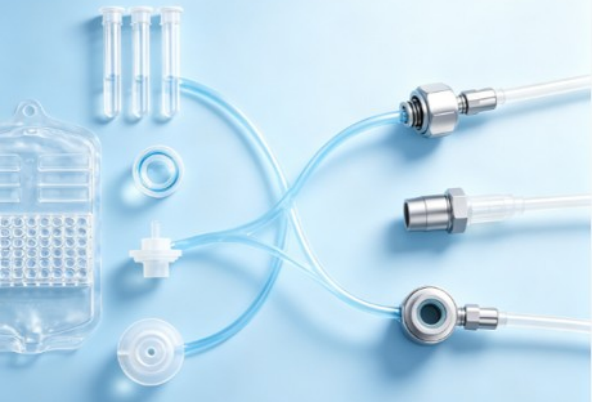
A sudden component defect, quality-system gap, or failed audit can disrupt medical device production and delay market entry.Given the stringent quality and regulatory standards for medical devices, selecting an oem medical device supplier requires more than comparing manufacturing capacity and price. Buyers should evaluate the supplier's quality management system, manufacturing controls, validation practices, and ability to support the requirements of the target market.

A supplier's quality management system is a key factor in OEM qualification. ISO 13485:2016 is the international quality management standard specifically developed for organizations involved in medical device design and manufacturing.
However, certification alone does not necessarily mean full regulatory compliance for every product. Buyers should verify the certificate's scope, validity, covered manufacturing site, and relevance to the products being sourced.
ISO 13485:2016 remains an important international framework for medical device quality management. In the United States, the FDA's Quality Management System Regulation (QMSR) became effective on February 2, 2026, incorporating ISO 13485:2016 by reference into 21 CFR Part 820.
For suppliers serving the U.S. market, buyers should assess whether the manufacturer's quality system supports applicable FDA requirements. An ISO 13485 certificate provides evidence of a quality management system but does not itself constitute FDA clearance, approval, or market authorization for a specific device.
Buyers should also evaluate how an OEM supplier controls processes that can affect product quality. This may include equipment qualification, process validation, critical parameter controls, and related documentation.
IQ (Installation Qualification), OQ (Operational Qualification), and PQ (Performance Qualification) may be used where appropriate, but they should not be treated as a universal requirement for every medical device process. The appropriate approach depends on the process, product risks, and applicable requirements.
|
Regulatory Framework |
Scope & Requirements |
Impact on OEM Selection |
|
ISO 13485:2016 |
Medical device-specific quality management system with a focus on quality and risk management. |
Provides a structured framework for medical device quality management and systematic quality control. |
|
FDA QMSR (21 CFR 820) |
FDA's medical device quality management regulation, effective February 2, 2026, incorporating ISO 13485:2016 by reference. |
Helps buyers assess whether a supplier's quality system supports applicable U.S. requirements. |
|
cGMP & IQ/OQ/PQ |
Manufacturing and equipment qualification practices used to establish appropriate process control. |
Provides evidence that relevant equipment and processes have been appropriately qualified or validated. |
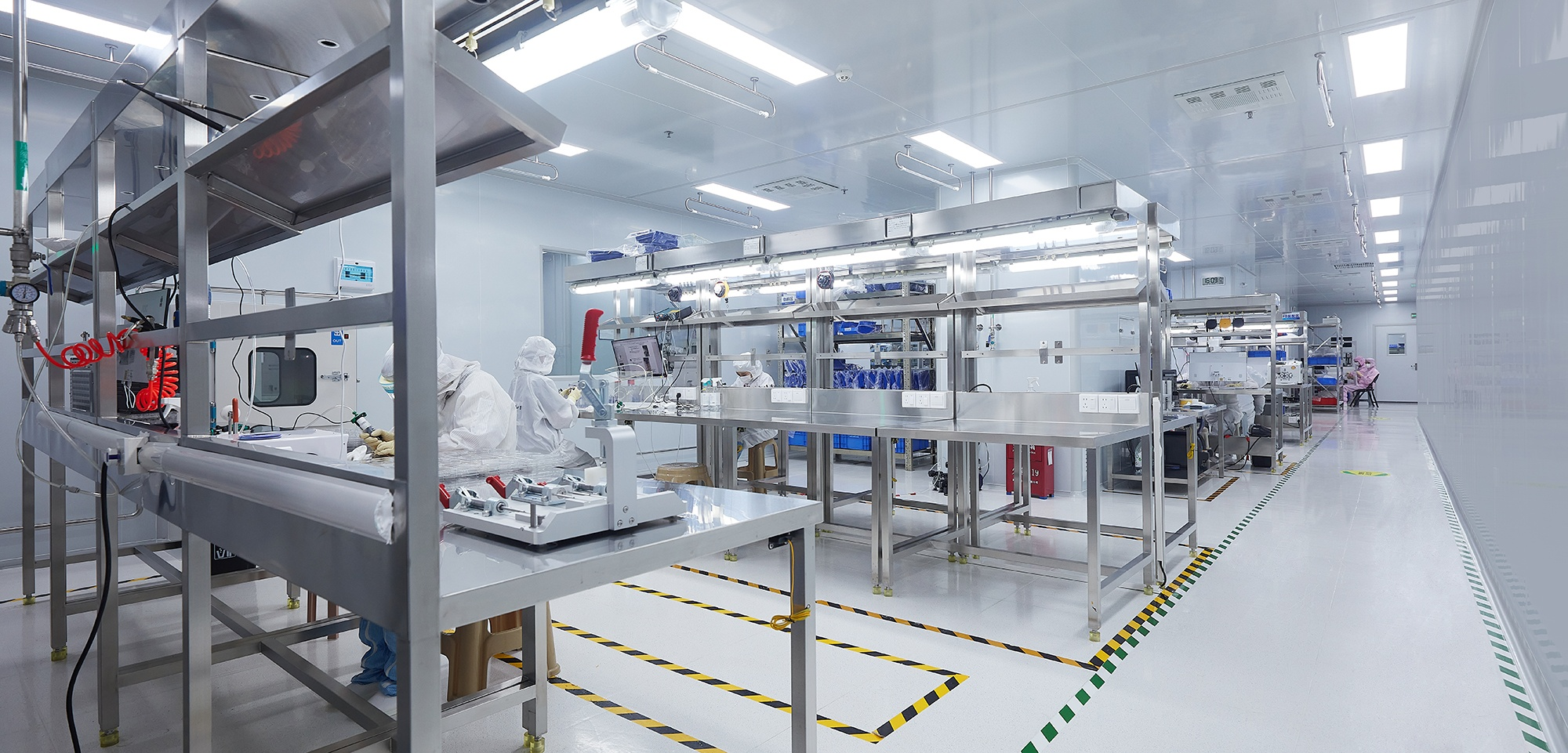
Manufacturing conditions and process control can directly affect contamination risk, dimensional consistency, and device quality. When evaluating an oem medical device supplier, buyers should assess whether the supplier's cleanroom controls and manufacturing processes are appropriate for the specific product and production requirements.
Cleanroom classification should be align with the product and manufacturing process rather than treated as a universal requirement. ISO 14644-1 classifies cleanrooms according to airborne particle concentrations, while related standards address monitoring and testing of cleanroom performance.
When qualifying a supplier, buyers can review the applicable cleanroom classification, environmental monitoring records, filtration systems, temperature and humidity controls, pressure differentials, and contamination-control procedures. Additional controls should be assessed according to the device and manufacturing process.
For components such as medical tubing, housings, and other precision parts, manufacturing capability should be evaluated based on dimensional tolerance, material compatibility, process repeatability, and inspection methods. Micro-extrusion and precision injection molding can support complex geometries and tight dimensional requirements when appropriately controlled.
Rather than relying on a supplier's equipment specifications alone, buyers should verify whether the supplier can consistently meet the product's drawings, material requirements, and critical quality characteristics.
Key manufacturing controls to review include:
· Cleanroom Controls: Appropriate classification, particle monitoring, filtration, and environmental control based on product requirements.
· Contamination Control: Documented procedures for personnel, materials, equipment, cleaning, and environmental monitoring.
· Micro-Extrusion: Capability to produce precision tubing or other small-profile components according to defined dimensional requirements.
· Precision Injection Molding: Consistent control of molding parameters, materials, tooling, inspection, and dimensional quality.
Digital traceability can improve control over materials, production records, inspections, and finished products. For an OEM supplier, buyers should determine whether manufacturing records can be linked to relevant material lots, production batches, or device identifiers.
ERP and MES systems can help connect material information, production activities, inspection results, and batch records across manufacturing operations. When appropriately configured and validated, these systems can reduce manual data entry and make quality records easier to retrieve during investigations or audits.
However, system integration alone does not guarantee regulatory compliance. Buyers should also review data integrity controls, record retention, access controls, and procedures for handling nonconforming products.
For devices or components where fluid or pressure integrity is critical, leak testing can identify defects before products are released. Automated pressure-decay or pressure-drop testing can provide a non-destructive method for evaluating the integrity of applicable components and assemblies.
When qualifying an OEM supplier, buyers should verify the test method, acceptance criteria, equipment calibration, test records, and how failed results are handled. Specific test technologies or performance claims should be evaluated against the requirements of the individual device.
Once the key supplier-selection criteria are established, the next step is to assess whether a manufacturer can provide the required engineering, production, testing, and quality-control capabilities. Kingsin operates as a one-stop OEM/ODM provider for medical-grade products, with its headquarters in Singapore and a manufacturing base in Dongguan, China. Its website states that the factory is certified to cGMP and ISO 13485 requirements.
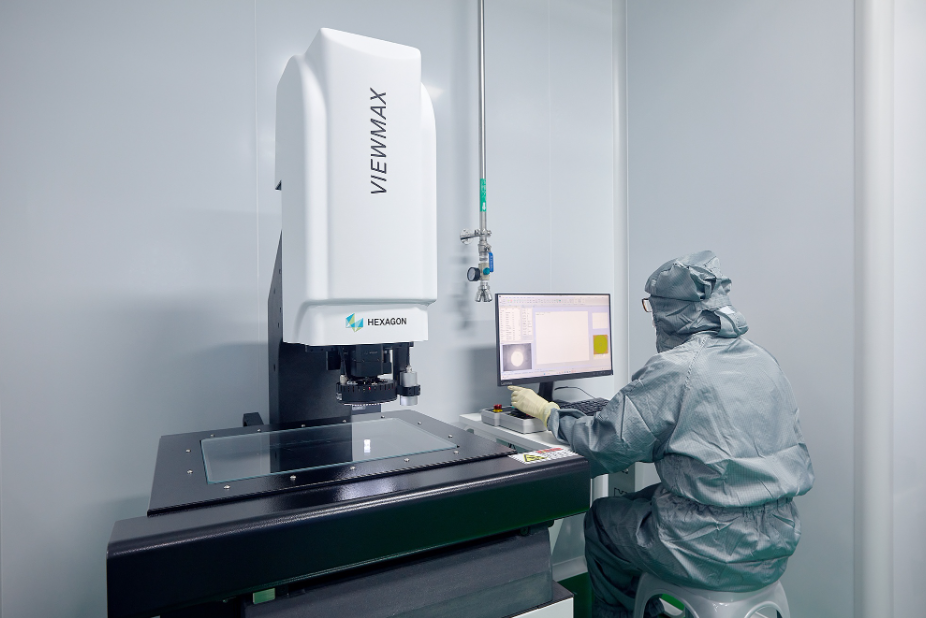
Kingsin's published capabilities cover product development, precision manufacturing, cleanroom assembly, testing, and quality control. According to its website, these include:
· Engineering Services: CAD design, DFM optimization, prototyping, sourcing, and ISO 13485-compliant documentation support.
· Precision Manufacturing: 100T–450T injection molding, medical-grade extrusion down to 0.22 mm, SMT, laser welding, and ultrasonic welding.
· Cleanroom Assembly: ISO Class 7 cleanroom production with controlled temperature, humidity, and air cleanliness.
· Laboratory & Quality Support: Microbiology and physico-chemical laboratories supporting bioburden, water, material, and other quality tests.
· Product Traceability: Quality systems designed to trace products to raw materials, manufacturing standards, and inspection results.
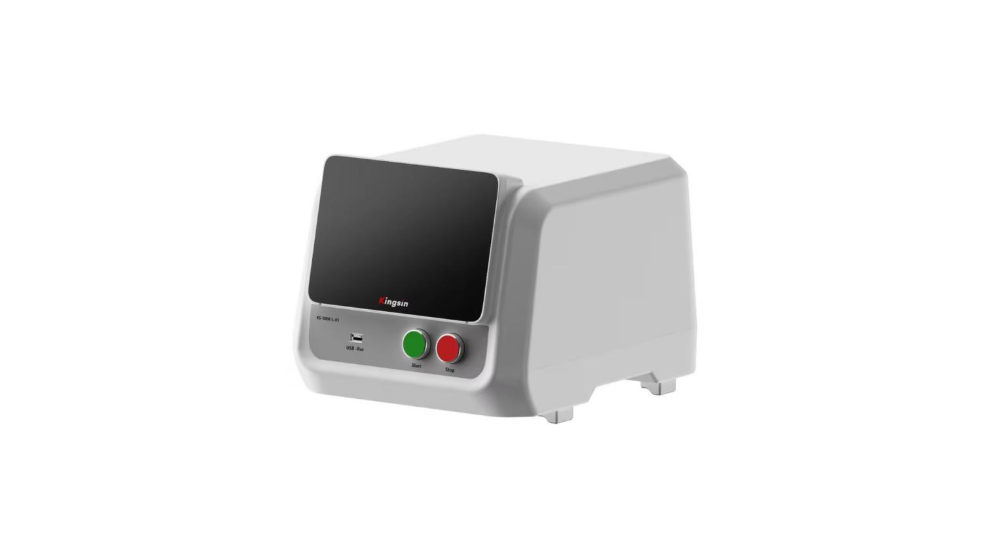
Kingsin's KS-500K-L-01 Air Leak Tester is designed for non-destructive leak detection. Its published specifications include a Direct Pressure Drop (PDR) / Differential Pressure Detection method and a leak resolution of 7 Pa.
|
Technical Specification Parameter |
KS-500K-L-01 Performance Capability |
|
Testing Method & Leak Resolution |
Direct Pressure Drop (PDR) / Differential Pressure Detection; 7 Pa leak resolution. |
|
Pressure Testing Range |
-89.6 kPa to +499.9 kPa; customizable |
|
Differential Pressure Range |
±2 kPa; customizable |
|
User Interface & Programs |
8-inch color LCD touchscreen; 120 parameter programs |
|
Digital System Integration |
MES integration for full-process digital traceability and quality control |
Selecting an OEM medical device supplier requires verification of quality systems, manufacturing capabilities, process controls, testing methods, and traceability. Kingsin's published capabilities—from engineering and precision manufacturing to ISO Class 7 cleanroom assembly and leak testing—read like a checklist of what to look for in a medical device supplier.


Copyright © 2025 Kingsin Technology Pte. Ltd. All rights reserved.
By: JOYMAGIC