
Release time: Sep 02,2026
Views: 16
Medical device manufacturing must address quality, risk, biological safety, and production controls according to the device, intended use, and applicable market requirements. ISO standards provide internationally recognized frameworks for managing these areas, but there is no single set of ISO standards that applies to every medical device. For companies involved in medical device sales, understanding which standards apply to a specific product is essential when evaluating suppliers, supporting OEM partnerships, and preparing for regulatory requirements.

ISO 13485 is a key standard for medical device quality management, but it is only one part of the broader compliance framework. The standards that apply to a particular device depend on factors such as its intended use, materials, biological contact, manufacturing process, and the regulatory requirements of the target market. ISO 13485 addresses the quality management system, while ISO 14971 covers medical device risk management, the ISO 10993 series addresses biological evaluation, and ISO 14644-1 provides a framework for classifying cleanroom air cleanliness.
The key standards commonly relevant to medical device manufacturing include:
· ISO 13485 — Quality management systems for medical devices
· ISO 14971 — Risk management for medical devices
· ISO 10993 series — Biological evaluation of medical devices
· ISO 14644-1 — Cleanroom air cleanliness classification
Each addresses a different aspect of manufacturing and product safety, so manufacturers should determine applicability based on the specific device and target market rather than treating all four as universally mandatory.
ISO 13485:2016 specifies requirements for a quality management system that enables organizations involved in medical device design and manufacturing to consistently meet customer and applicable regulatory requirements. Its requirements cover areas such as quality management, resources, product realization, and measurement and improvement.
The standard focuses on establishing documented processes and demonstrating that those processes are effectively implemented in the organization’s operations.
ISO 13485 organizes its requirements into several clauses, each addressing a different aspect of the quality management system.
|
Clause |
Focus Area |
|
Clause 4 |
Quality management system requirements and documentation |
|
Clause 5 |
Management responsibility and quality policy |
|
Clause 6 |
Resource management, including personnel competence and infrastructure |
|
Clause 7 |
Product realization, including design, development, and production controls |
|
Clause 8 |
Measurement, analysis, and improvement |
Clause 7 is particularly relevant to manufacturing because it covers product realization activities, including design and development, production, and related controls. Manufacturers therefore need processes that can consistently support specified product and quality requirements.
The relationship between ISO 13485 and U.S. medical device requirements has become more direct under the FDA's Quality Management System Regulation (QMSR). The QMSR became effective on February 2, 2026, and incorporates ISO 13485:2016 by reference into the FDA's medical device quality management requirements under 21 CFR Part 820.
This alignment does not mean that ISO 13485 certification alone satisfies every FDA requirement. Manufacturers must still meet the applicable FDA requirements for their devices and maintain the records and controls required under the QMSR.
For manufacturers serving international customers, understanding both ISO 13485 and the applicable market-specific requirements is therefore important when preparing for supplier qualification and regulatory activities.
ISO 13485 establishes the quality management framework, while other standards address specific product and manufacturing risks. Three commonly relevant standards are ISO 14971 for risk management, the ISO 10993 series for biological evaluation, and ISO 14644-1 for cleanroom classification.
ISO 14971:2019 establishes a systematic process for identifying hazards, estimating and evaluating risks, implementing risk controls, and monitoring the effectiveness of those controls throughout the medical device lifecycle. It applies to medical devices, including software as a medical device and in vitro diagnostic medical devices.
For example, an infusion pump manufacturer may evaluate risks associated with software, delivery accuracy, or mechanical failures. The manufacturer then documents the risk evaluation and applies appropriate controls as part of the device's risk management process.
The ISO 10993 series provides a framework for evaluating the biological safety of medical devices. The current ISO 10993-1 edition, ISO 10993-1:2025, establishes general principles for evaluating biological safety within a risk management process and considers factors such as materials, biological hazards, and the nature and duration of body contact.
The evaluation required for a device depends on its intended use and contact with the body. For example, devices that contact tissue for longer periods or are implanted may require different biological evaluations from devices with limited surface contact. The specific tests should therefore be determined through the applicable biological evaluation and risk management process rather than assuming the same test package applies to every device.
ISO 14644-1:2015 classifies cleanrooms and clean zones according to airborne particle concentrations. It provides the framework for determining air cleanliness based on specified particle sizes, but it does not determine which cleanroom class a particular medical device must use. That decision depends on the product, manufacturing process, contamination-control strategy, and applicable requirements.
|
Cleanroom Class |
Max Particles (≥0.5 µm/m³) |
Typical Medical Use |
|
ISO 5 |
3,520 |
Aseptic / sterile critical zones |
|
ISO 7 |
352,000 |
Non-sterile device assembly, pre-sterilization packaging |
|
ISO 8 |
3,520,000 |
General component handling |
The particle concentration figures above correspond to the ISO 14644-1 classification framework. The medical applications listed are illustrative rather than requirements specified by ISO 14644-1 itself.
For medical device companies selecting OEM/ODM partners, ISO certification can be an important part of supplier qualification. Buyers and distributors may also evaluate whether a manufacturer has the quality systems, production controls, and documentation needed to support their specific product requirements.
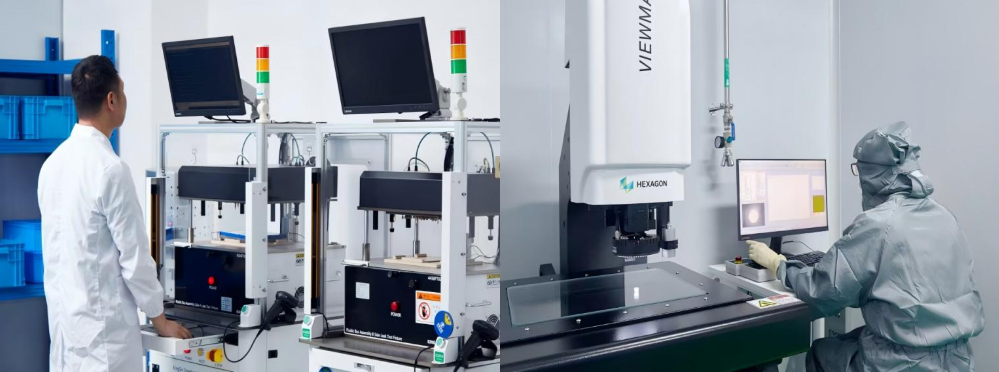
Kingsin is a Singapore-headquartered OEM/ODM provider for biomedical and medical-grade products, with its factory stated on its official website as certified with cGMP and ISO 13485. Its manufacturing capabilities include ISO 7 cleanroom assembly, quality control, engineering services, and product development support.
Beyond certification, manufacturing evidence can also help demonstrate how quality is controlled during production. Kingsin states that its quality system includes traceability from raw materials through manufacturing standards and inspection results.
For companies evaluating an OEM/ODM manufacturing partner, Kingsin's official product and manufacturing information highlights several relevant capabilities:
· ISO 13485 and cGMP manufacturing — Provides an established quality management and manufacturing framework for biomedical and medical-grade products.
· ISO 7 cleanroom assembly — Kingsin states that its assembly processes are conducted in an ISO Class 7 cleanroom, with environmental controls for particle levels, temperature, and humidity.
· OEM/ODM engineering support — Services include product design support, DFM, prototyping, technical documentation, sourcing, and manufacturing.
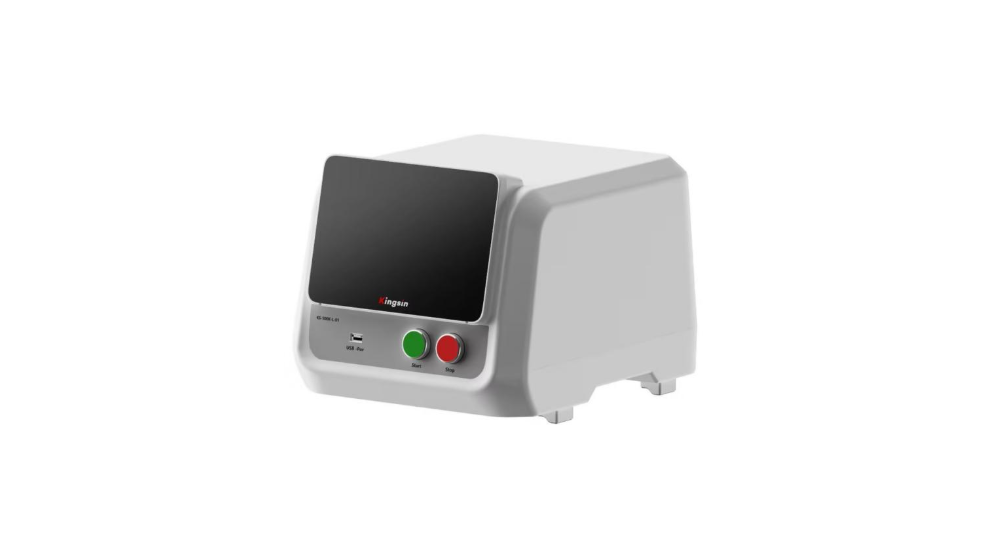
· KS-500K-L-01 Air Leak Tester — The company's product page specifies 7 Pa leak resolution, Direct Pressure Drop testing, and storage, retrieval, and USB export of test results for data traceability.
These capabilities connect certification requirements with practical manufacturing and inspection processes, which can be particularly relevant when customers are qualifying an OEM/ODM supplier.
Meeting ISO requirements involves more than obtaining a certificate. Medical device companies also need appropriate quality systems, controlled production processes, documentation, and inspection capabilities.
For companies working with OEM/ODM partners, selecting a manufacturer with established ISO 13485 and relevant manufacturing infrastructure can help simplify supplier evaluation and support consistent production.
ISO standards provide structured frameworks for managing quality, risk, biological safety, and manufacturing environments, but their applicability depends on the device and target market. ISO 13485, ISO 14971, the ISO 10993 series, and ISO 14644-1 each address different aspects of medical device manufacturing.
For companies seeking an OEM/ODM partner, established quality systems and practical manufacturing capabilities can make supplier evaluation more straightforward. With ISO 13485 and cGMP-certified manufacturing capabilities, ISO 7 cleanroom assembly, and supporting engineering and testing services, Kingsin provides a manufacturing option for companies developing biomedical and medical-grade products.


Copyright © 2025 Kingsin Technology Pte. Ltd. All rights reserved.
By: JOYMAGIC