
Release time: Sep 03,2026
Views: 21
Reliability becomes meaningful only when a device delivers consistent performance beyond a single successful build. In practice, variation accumulates across component dimensions, material behavior, assembly conditions, and fabrication processes. A product that works at nominal conditions may still drift when those inputs move within their normal production ranges.
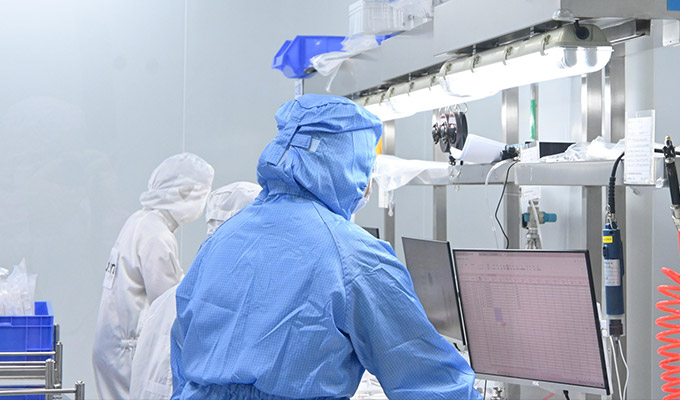
For reliability programs, medical device engineering services strengthen consistency by defining which characteristics govern performance and by preserving evidence across repeated builds. At Kingsin, engineering, quality, and manufacturing activities are connected so product stability is assessed against real production behavior rather than one ideal sample.
Reliability work starts by identifying the small set of characteristics that have disproportionate influence on function. These may be a sealing interface, a dimensional stack, a material property, an electrical connection, or a structural relationship between several parts.
For biomedical engineering devices, component interaction is especially important. Two parts can each meet their individual specifications yet still produce inconsistent system behavior when their tolerances combine unfavorably.
A reliability-focused specification should distinguish:
l performance-critical features requiring close control;
l secondary dimensions that accept wider variation;
l interface relationships affected by multiple components;
l material properties that influence processing or functional response.
This hierarchy prevents every feature from being treated as equally critical. It also gives inspection teams a clearer basis for concentrating measurement effort where variation is most likely to affect the finished device.
That connection becomes practical when biomedical engineering services translate design intent into measurable requirements that can remain consistent across engineering, production, and quality review.
A robust configuration should continue to meet its intended requirements when components and processes vary within realistic limits. Batch consistency therefore provides a more useful reliability signal than the performance of one carefully prepared unit.
Teams compare dimensional results, functional observations, assembly behavior, and other relevant checks across production lots. The goal is not to demand identical numerical results from every unit, but to determine whether normal variation stays inside a range that preserves required performance.
Trend review is useful. A measurement may remain within its acceptance limit while gradually moving in one direction across several batches. That shift indicates a material, tooling, fixture, or process condition worth examining before it becomes a larger consistency problem.
For longer-running programs, evidence from early and later batches should be compared against the same technical baseline. This reveals gradual performance drift before it develops into a recurring production pattern.
Our company's quality activities include First Article Inspection, sampling of key dimensions, process inspection, functional checks, and production records covering parameters, test results, equipment status, and process consistency. These records provide a useful context when a recurring change needs engineering interpretation.
Long-term reliability improves when test results are reviewed together to identify recurring issues and trends.
Consistent changes in product lead to better performance drift. A new supplier component, revised dimension, altered material, or updated assembly condition may appear minor, yet repeated small changes can move the product away from the configuration originally evaluated.
For complex medical device assemblies, a controlled technical baseline helps prevent this drift. Drawings, BOM information, inspection requirements, and revision records should identify which configuration was reviewed and which product characteristics are expected to remain stable.
When a meaningful change is proposed, engineering compares it with the current baseline and determine which evidence still applies. This provides a more reliable basis for decision-making. Previous conclusions also require confirmation before being applied to the current product.
A stable baseline also supports investigation when field or production observations emerge later. Teams can identify what version was produced, which materials were used, and which inspection criteria applied to that batch.
The result is continuity: reliability evidence remains tied to a known configuration instead of being separated from the product history it was meant to support.
Production methods create their own characteristic patterns of variation. Injection molding, medical-grade extrusion, SMT, welding, and cleanroom assembly do not influence products in the same way, so reliability review should reflect the actual fabrication route.
At Kingsin, we review engineering observations alongside process data. This provides a clearer view of the relationship between design decisions and manufacturing results. Repeated interface difficulty may point to an overly sensitive tolerance relationship, while a dimensional trend may call for closer examination of the relevant production step.
The key is attribution.If the variation comes from product design, the design may need to change. However, it is worth considering stronger process controls when clear requirements still produce inconsistent results.
Long-term consistency improves when medical device engineering services connect performance-critical features, batch evidence, revision discipline, and manufacturing behavior. Reliability then becomes measurable in repeated production rather than a claim based on one successful verification event.
Reliable medical products depend on stable performance across batches, not isolated success. By focusing on performance-critical features, monitoring drift, preserving a controlled baseline, and interpreting variation against the actual production route, teams can build stronger evidence of repeatability.
At Kingsin, we connect engineering, quality, and manufacturing information to help customers maintain clearer product consistency from released design through repeated production.


Copyright © 2025 Kingsin Technology Pte. Ltd. All rights reserved.
By: JOYMAGIC