
Release time: Oct 10,2026
Views: 8
A cleanroom controls the environment around manufacturing, but it does not make every product automatically acceptable. Clean production depends on a combination of environmental conditions, operating discipline, utilities, material handling, and product-specific checks. Testing helps show whether those controls are behaving as expected over time.
For cleanroom projects, medical device testing should be planned alongside environmental monitoring rather than substituted for it. At Kingsin, we operate cleanroom assembly and support environmental, microbiological, water, and material-related laboratory work. Each of those activities answers a different manufacturing question.
Medical Device Testing and Environmental Monitoring Answer Different Questions
Product testing focuses on the device or material being evaluated. Environmental monitoring focuses on conditions in the area where controlled work takes place. The two evidence streams are related, but one cannot replace the other.
If a product sample shows an unexpected microbial result, environmental records may help determine whether the surrounding production conditions changed. If environmental monitoring shows a shift, product information helps the team assess whether affected work requires additional review.
This distinction makes investigations more focused. Instead of labeling every issue a “cleanroom failure,” teams can look at the product, room conditions, handling, materials, and process records separately.
Medical device testing therefore addresses product-specific questions while environmental monitoring supplies context about the controlled production area.
The same separation is useful during routine review. A stable environmental trend does not prove that every product characteristic is acceptable, and a passing product result does not show that the room remained controlled throughout the entire production period.
Use Environmental Monitoring to Build a Trend, Not a Snapshot
Cleanroom environmental monitoring services are most useful when results can be compared over time. One acceptable reading shows what happened at one point; a trend can show whether conditions are stable across production periods.
The sampling plan also affects how useful that trend becomes. Locations, timing, production activity, and method should remain consistent enough for results to be compared meaningfully. When the plan changes, the record should show why.
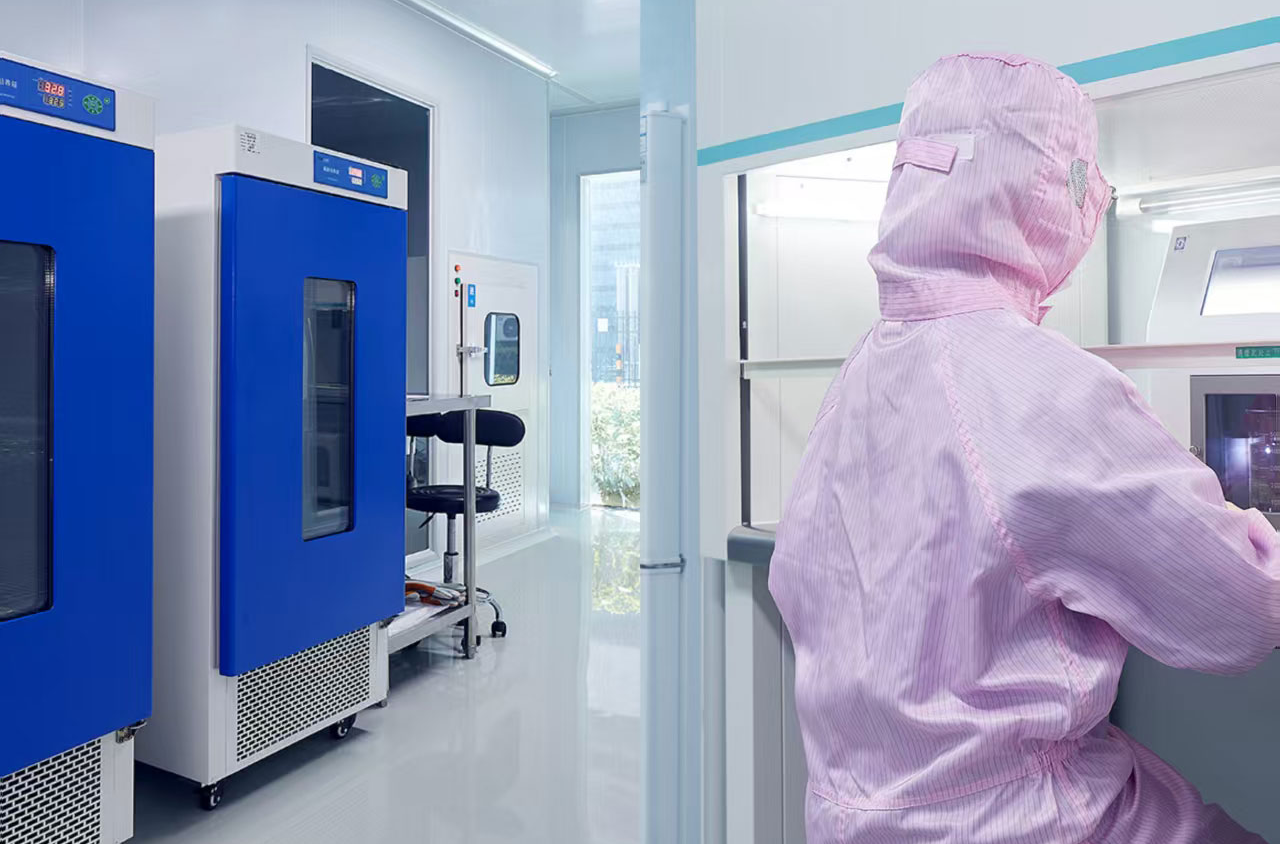
Our microbiology laboratory supports air sampling and incubation for environmental monitoring. Results from that work can be reviewed with cleaning, disinfection, operator, and production records when an unusual pattern appears.
When using cleanroom environmental monitoring services, the monitoring plan should define where samples are taken, when they are taken, how results are recorded, and what response is required when a condition falls outside the expected range.
Cleanroom environmental monitoring services should therefore function as part of process control, not as a stand-alone facility claim. Trend review can also help teams distinguish an isolated reading from a pattern that justifies a broader investigation.
Treat Water and Material Controls as Separate Evidence Streams
Air conditions are only one part of controlled manufacturing. Water used for cleaning, rinsing, solution preparation, or laboratory work may also require appropriate monitoring. Materials can introduce another set of questions through their physical properties or interactions with solutions and disinfectants.
Our production-environment information describes a purified-water system, while Lab Support includes purified-water and physicochemical testing. Material compatibility work is also available when a project needs evidence about interaction or degradation.
These controls should remain separate in the investigation logic. An environmental result cannot show that a material is compatible, and a material result cannot show that a cleanroom remained under control during a production period.
Medical device testing becomes more useful when each result is assigned to the risk it is actually capable of addressing.
Utilities and materials should also be traceable to the relevant production period where appropriate. If an investigation starts later, teams need enough context to compare environmental, water, material, and product records without assuming that all evidence came from the same conditions.
Connect Monitoring Results to a Defined Manufacturing Response
An environmental deviation should lead to a clear response path. The team may need to confirm the result, review cleaning and disinfection records, check personnel or material flow, identify potentially affected production, and decide whether additional product evaluation is justified.
Traceability makes this possible. If production records show which lots were assembled during the relevant period, the investigation can focus on affected work rather than expanding unnecessarily.
A practical cleanroom-control system therefore connects environmental results, cleaning records, production dates, batch identity, product test information, and documented follow-up.
The response should also define closure criteria. Teams need to know what evidence is required before the issue can be considered resolved and whether any affected material or product remains on hold during the investigation.
Within our Kingsin workflow, we review controlled-environment information alongside manufacturing and quality records. Within our workflow, environmental results are reviewed alongside manufacturing and quality records so that deviations can be investigated and addressed within the production process.
Conclusion
Cleanroom manufacturing depends on several evidence streams, including environmental monitoring, utilities, material controls, product checks, and traceable production records. Cleanroom environmental monitoring services show how the controlled area is behaving, while medical device testing addresses product- or material-specific questions.
At Kingsin, we connect environmental results with relevant production and quality records so monitoring can lead to a defined response. This helps us manage controlled manufacturing as an active process rather than treating cleanroom status as a stand-alone facility claim.


Copyright © 2025 Kingsin Technology Pte. Ltd. All rights reserved.
By: JOYMAGIC