
Release time: Sep 14,2026
Views: 14
Development risks are easier to manage when teams know what they are dealing with. “The design may fail” is too broad to guide action, while “the connector interface may not maintain the required fit after the material change” identifies an uncertainty that can be evaluated, assigned, and closed.
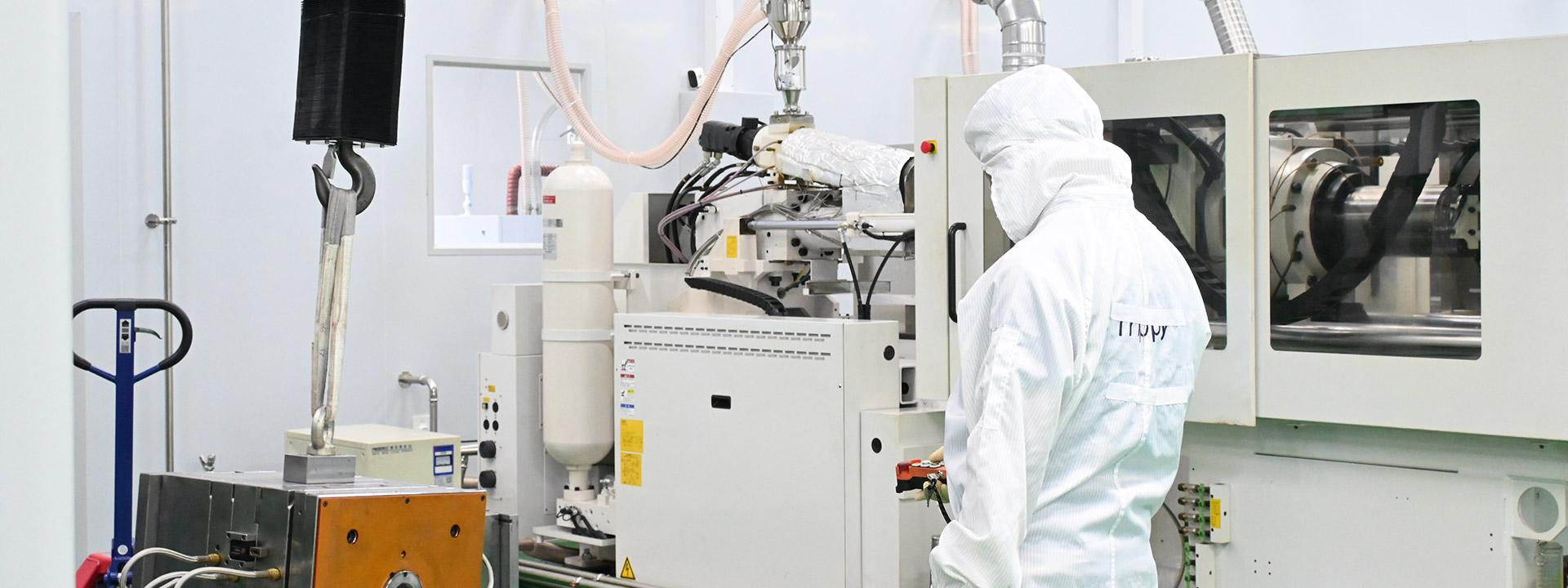
A risk-based workflow connects open engineering questions directly to concrete evidence, mitigation steps, and acceptance criteria. At Kingsin, engineering support connects concept work, DFM, sample development, testing resources, documentation, sourcing, and manufacturing feedback.
Different uncertainties require different controls. Requirement ambiguity, interface mismatch, material suitability, incomplete verification, and revision errors may all threaten development, but they do not produce the same consequence or require the same evidence.
A practical review first considers the potential impact of the issue, how likely it is to occur under the proposed configuration, and how readily the problem would be detected before later project stages. The goal is not to generate a complicated score for every detail; it is to separate high-impact exposure from routine engineering work.
Typical categories include:
l requirement uncertainty: the expected function or acceptance condition is unclear;
l interface exposure: two components may not fit, seal, align, or assemble as intended;
l material exposure: properties or compatibility remain uncertain;
l verification exposure: available evidence does not answer the engineering question;
l revision exposure: a change may invalidate earlier conclusions or released information.
This prioritization gives the team a reason for addressing one item before another.
Medical device prototyping and testing is most useful when the build is tied to a defined exposure. An interface concern might require fit or leak-related evaluation, while a material question could justify property or compatibility testing.
Before the sample is produced, the team should state what result would reduce the uncertainty enough to proceed. That acceptance logic prevents a successful-looking prototype from being interpreted too broadly.
The outcome should lead to a clear disposition: close the item, reduce its priority, introduce a mitigation, revise the configuration, or request another targeted evaluation. Each result changes the status of the original concern rather than simply adding another report to the project file.
Kingsin’s physico-chemical laboratory evaluates material properties such as density, viscosity, melting point, and hardness, as well as compatibility with solutions, drugs, or disinfectants. Quality resources support dimensional, functional, electrical, and applicable leak testing.
Used selectively, medical device prototyping and testing replaces assumption with evidence at the point where the evidence is most useful.
Not every identified issue requires redesign. Sometimes the appropriate mitigation is a tighter inspection point, a clarified material requirement, a changed assembly method, or an additional verification step.
A practical risk register should distinguish inherent exposure from residual exposure after mitigation. Recording what remains after product changes, inspection, testing, or process controls prevents a completed action from being mistaken for complete risk removal and supports a clearer acceptance decision.
The engineering team should record four elements for each significant exposure: the identified problem, the planned control, the evidence expected after that control, and the condition under which the remaining exposure is acceptable for the next phase.
This makes risk decisions auditable. A reviewer sees why the project moved forward rather than relying on a general statement that the issue had been “addressed.”
That discipline is easier to maintain when medical device engineering services keep the evidence tied to the current product revision. If geometry, material, or component selection changes later, the team determines whether the earlier acceptance remains valid or whether the issue must be reopened.
Residual uncertainty should therefore be visible rather than silently carried forward. A project proceeds with a known open item when impacts and mitigating plans are understood; hidden exposure is much harder to manage.
Late revisions are a common source of renewed exposure because one change can affect several earlier decisions. A new material may influence processing, a connector modification may alter leak-related behavior, and a component substitution may change inspection requirements.
Impact review should follow the relationships affected by the revision, not merely the size of the edit. Teams need to ask which requirements, tests, sourcing records, or production instructions depend on the changed feature.
Revision-controlled drawings, BOM information, inspection records, and documented decisions help preserve that connection. Before production commitment, every high-impact open item should have an owner and an explicit disposition.
Additional prototyping and testing are required whenever a design revision introduces new, unanswered questions. The aim, however, is not endless verification; it is a closed-loop process in which uncertainties are identified, controlled, reviewed, and formally accepted or retired.
Development exposure falls when teams classify uncertainties, prioritize their impact, define mitigation measures, and establish acceptance logic before moving forward. Targeted evidence and disciplined revision review keep significant issues visible instead of allowing them to reappear later.
At Kingsin, our engineering, laboratory, quality, documentation, and manufacturing resources support this structured path from identified uncertainty to evidence-backed closure.

Copyright © 2025 Kingsin Technology Pte. Ltd. All rights reserved.
By: JOYMAGIC